Argus - Fine American Cameras -- Errata and Addenda
Updates after publication of the book Argus - Fine American Cameras
Copyright Robert E. Kelly, Charles Ronald Norwood, Michael J. Reitsma and Phillip G. Sterritt.
Last updated 5/7/2026.
This site is not affiliated with any current incarnation of Argus Camera Company.
Inevitably in any published book, errors of commission and omission are found after the ink has dried. And we intend to keep studying all the topics in this book, as well as new ones, and adding to our store of knowledge. To the end of keeping the reader apprised of such discoveries, we are publishing this webpage which we will maintain.
On page 21, mention is made of a variant of the A series shutter release having a 'rosette'-style button on the end, found on later examples of the Model A. It was noted that examples of the Model K have this feature; it should read that examples of
the Model D have this feature. (Worth noting the feature does appear on Model AA and Model M cameras.)
Addenda:
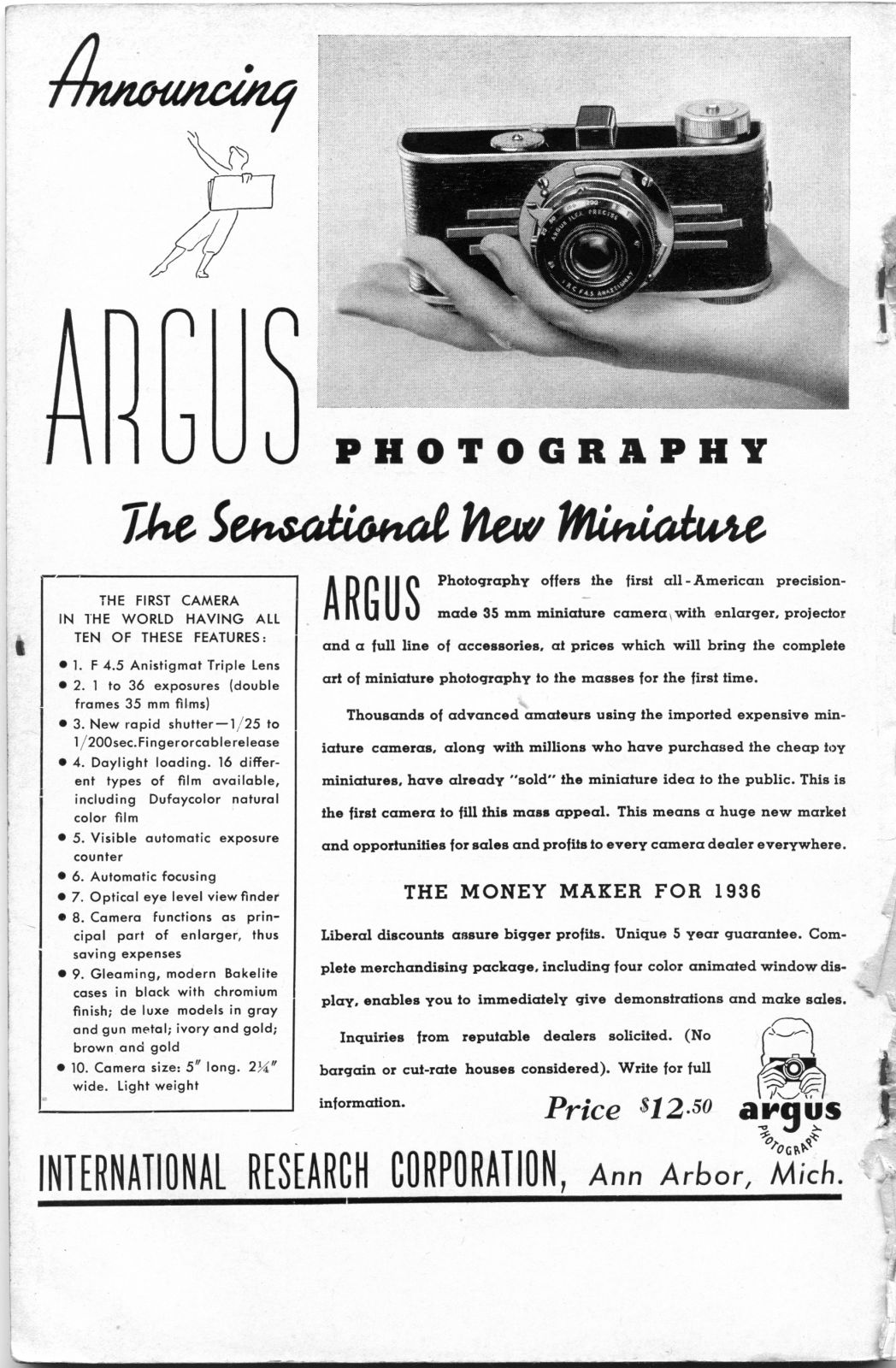
Ross Orr provided us with this image from the September 1935 issue of 'The New Photo-Miniature' magazine, which has this ad announcing the Model A. This was earlier than the oldest such ad we knew about before.return to Sections and Chapters listing
Chapter 2: C Series Cameras: Model C, C2, C3, Match-Matic C3
Errata:
Accessory Lenses
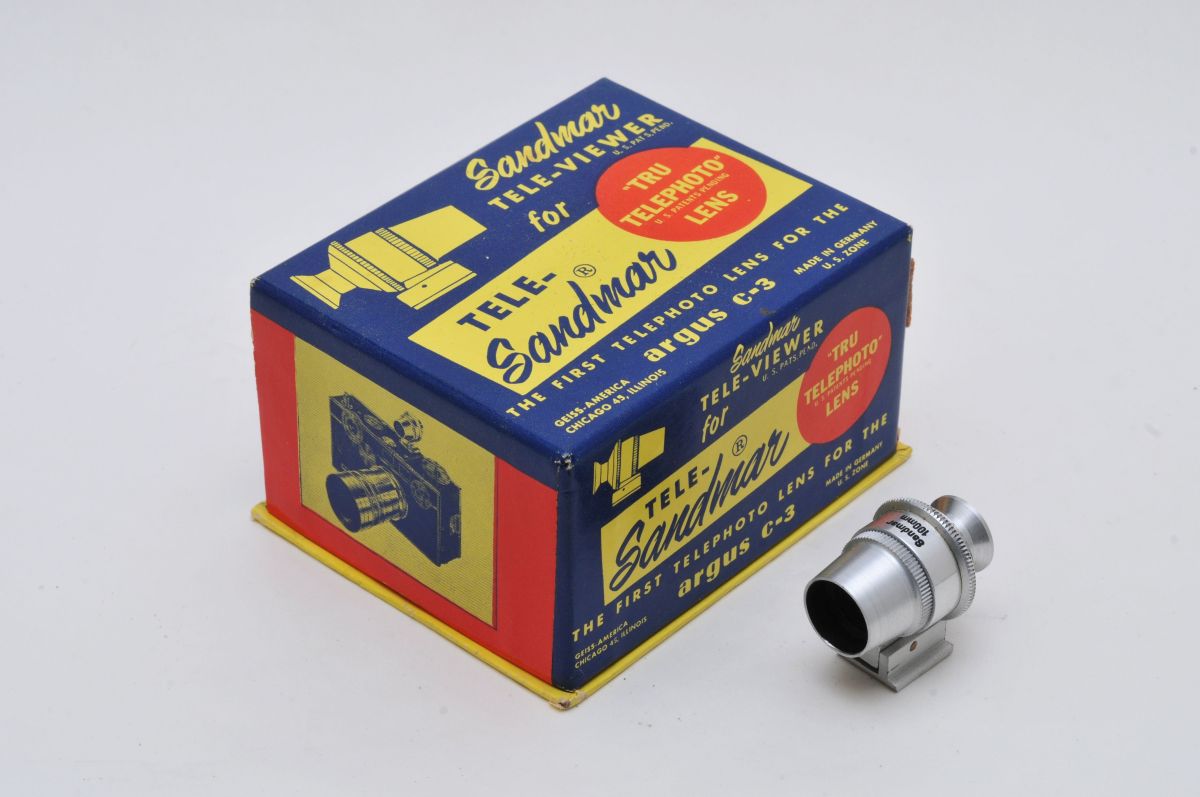
The viewfinder shown in the top picture on page 64 was not the original finder for the Sandmar 100mm Tru-Telephoto. The Sandmar Tele-Viewer viewfinder shown here was supplied by Geiss-America. C3s of that vintage didn't have accessory shoes, so add-on accessory shoes were provided, which are more rare than the finders themselves.return to Sections and Chapters listing
Chapter 3: Model D and Model K
Addenda:
Model K 'Exposurator' extinction meter
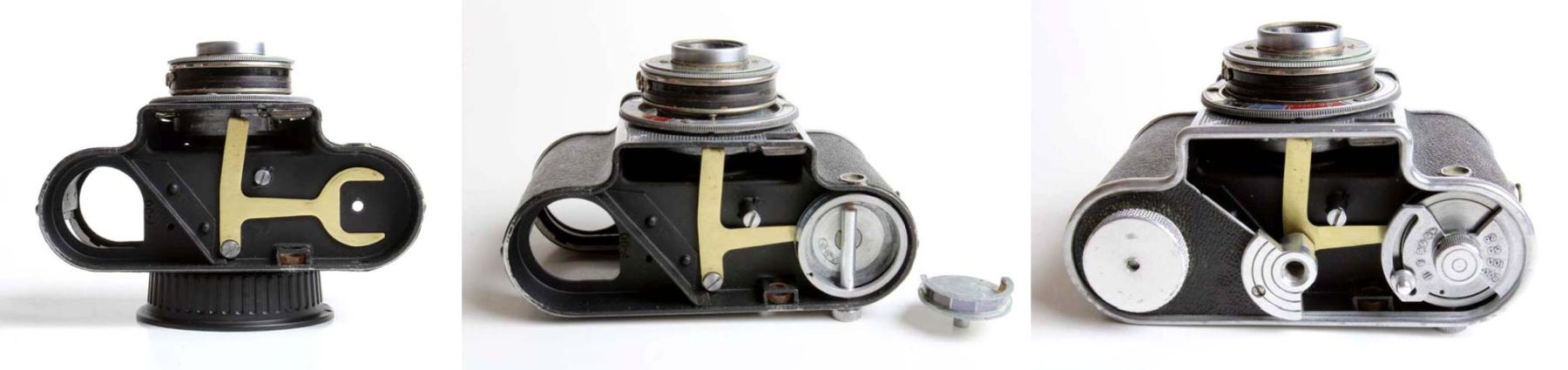
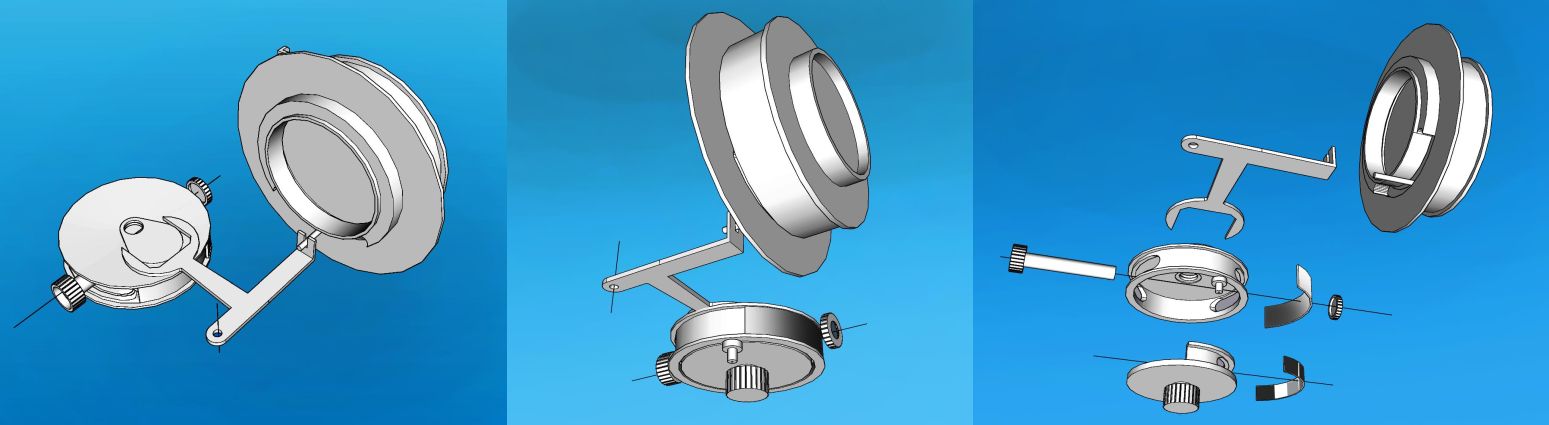
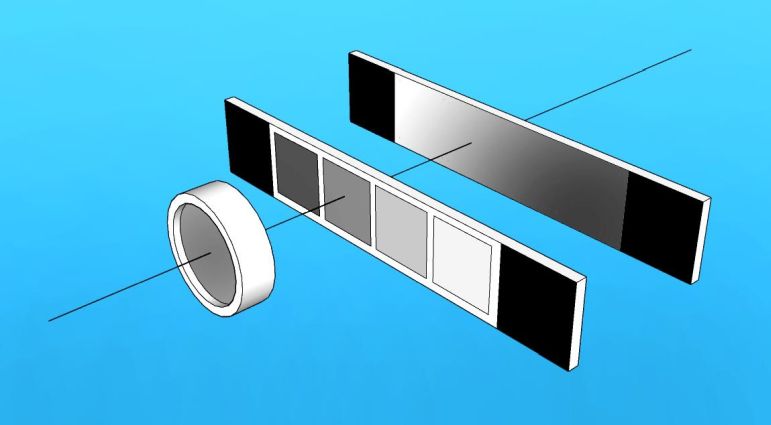
Mike Reitsma and Pam Buckley did a presentation at the Argus Museum Fall Conference on the details of the semi-coupled extinction meter for the Model K. As part of this, they used a 'parts' Model K to create a cutaway demonstrator model showing how the mechanism worked, which is a work of art in itself. They provided illustrations of the mechanism as used in their presentation, which follow.
The cutaway model of the Model K from below, showing (left) the brass fork that couples the meter cam to the aperture, (middle) the exterior drum of the meter mechanism with the gradient scale for aperture, and (right) the interior drum with the gradient scale for shutter speed installed along with its control knob, aperture control and external scales for shutter speed and apertures.Pictorial images of the Model K meter, showing (left) how the brass aperture coupling fork engages with the cam on the meter control, (middle) the assembled meter mechanism and aperture control fork, and (right) an exploded view of all components for the meter controls and coupling mechanism.Pictorial images of the Model K meter's gradient scales -- the left-hand side is on the external control drum, and has sharply defined gradients for the distinct shutter speeds (the value for which is pre-set by the user), while the right-hand scale for apertures has a smoothly-graded gradient so in-between aperture values can be set when the user adjusts the aperture control.
ALSO -- One of the attendees at the Conference noted that the meter had no way to set the sensitivity/speed rating of the film being used. Consulting the instruction book for the Model K, page 12 gives the details on the 'basis' sensitivity rating the meter is designed for -- Weston rating of 48-50 daylight, citing film like Agfa Supreme and Eastman Plus X of the day; as well as suggested adjustments for slower films.
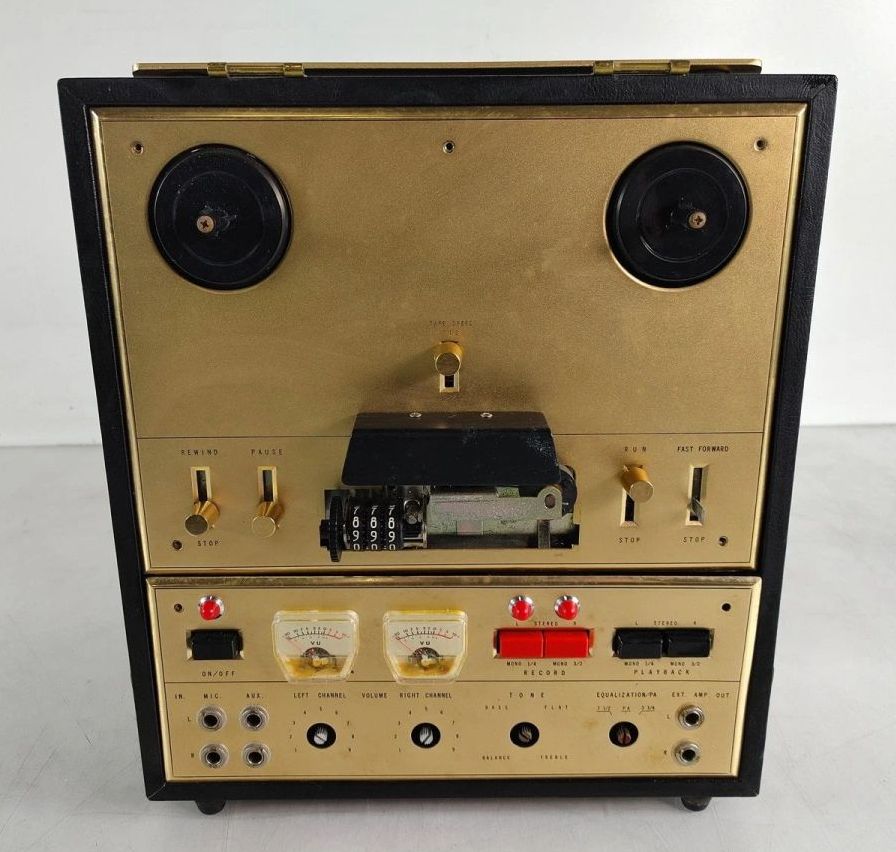
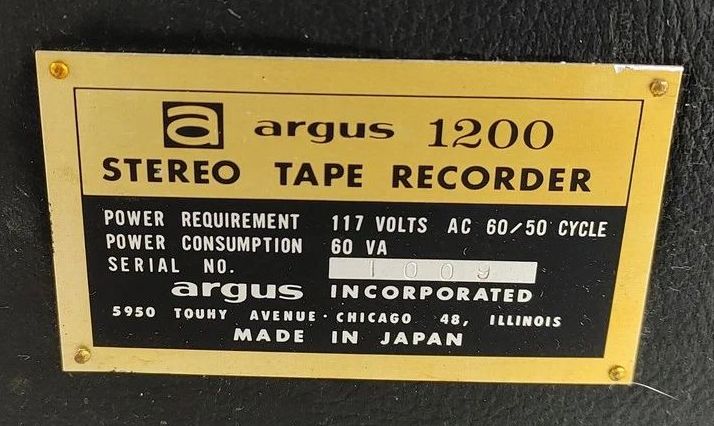
When Argus introduced the original three models (200, 400 and 800) in early 1963, they stated there would be more models to follow. Another model has now turned up -- the 1200. Looks to be about the same vintage as the others, based on what is on the back label, but with somewhat less elegant styling compared to the originals -- possibly a different manufacturer. Images courtesy of TR Reuse Group, Indianapolis, Indiana.
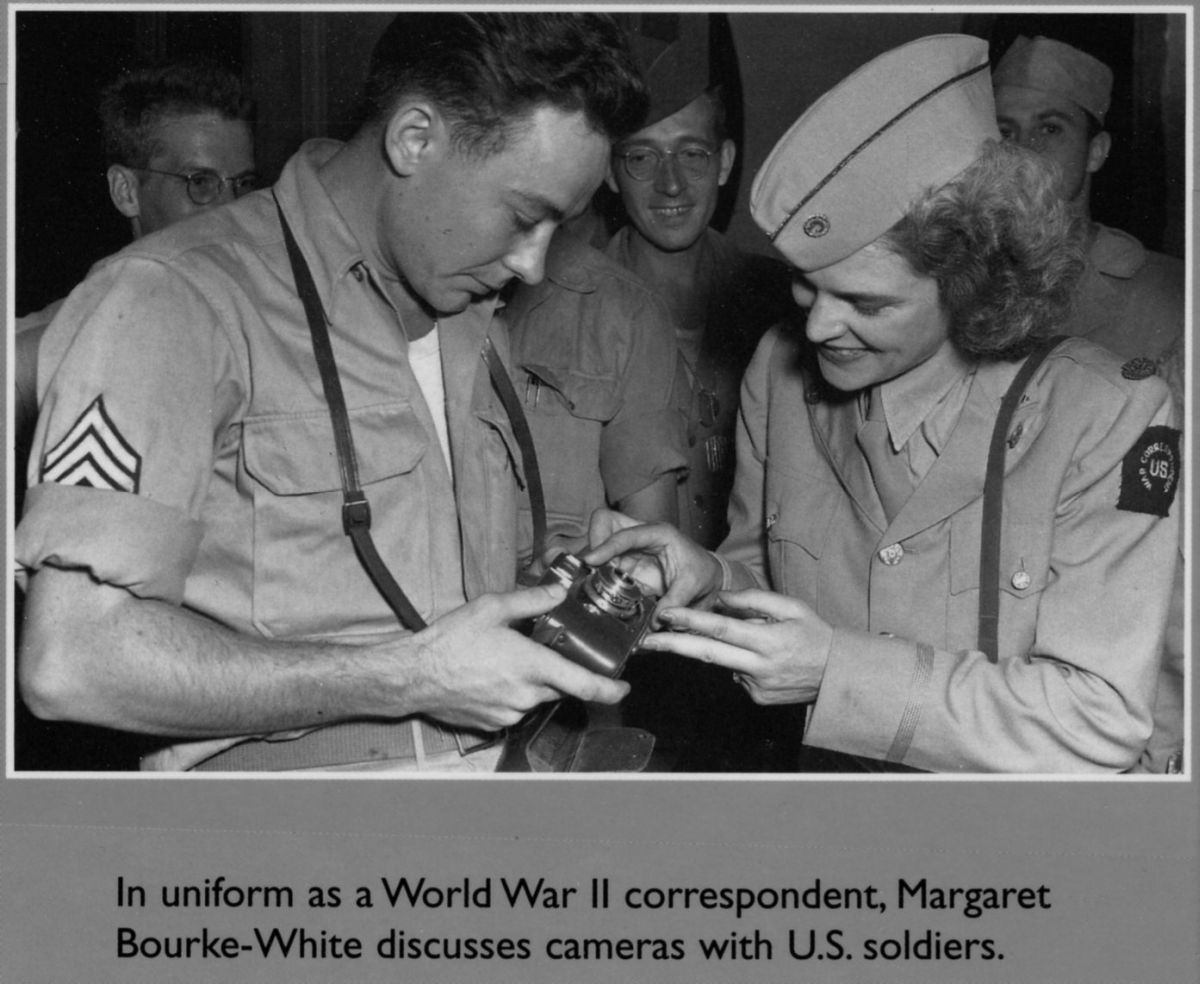
From the back cover of the book "Margaret Bourke-White A Photographer's Life", by Emily Keller. The soldier's camera, on closer inspection, is an Argus CC (Colorcamera)return to Sections and Chapters listing